When it comes to the steel industry, two terms often create confusion — steel plant and rolling mill. While both are integral to steel production, they serve very different purposes and operate at distinct stages of the manufacturing process. If you’ve ever wondered what sets them apart, this guide breaks it all down — and highlights why choosing the right steel production facility matters for construction, infrastructure, and beyond.
Understanding a Steel Plant
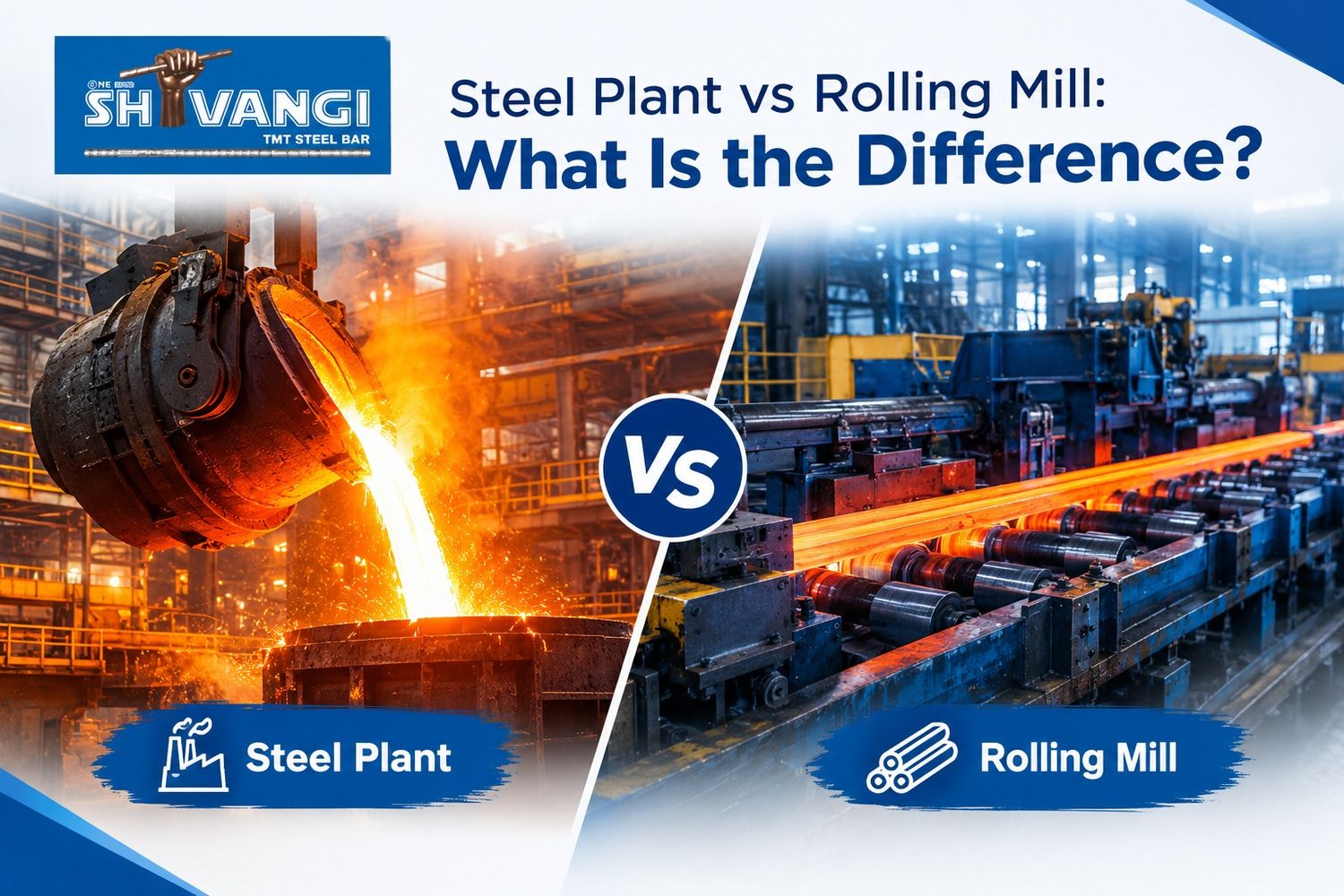
A steel plant, often referred to as an integrated steel plant, is a large-scale facility where raw materials are converted into steel from scratch. The process begins with iron ore, coal, and limestone being fed into a blast furnace to produce pig iron (also called hot metal). This pig iron is then refined in a Basic Oxygen Furnace (BOF) or an Electric Arc Furnace (EAF) to produce raw steel in the form of billets, blooms, or slabs.
Key characteristics of a steel plant include:
- Large infrastructure — These facilities span hundreds of acres and require enormous capital investment.
- Primary production — Steel plants handle the complete transformation from ore to steel.
- Multiple processes under one roof — Sintering, coking, smelting, refining, and continuous casting are all carried out within the same facility.
- High energy consumption — Blast furnaces and electric arc furnaces demand massive amounts of electricity or coke fuel.
Steel plants are essentially the backbone of any nation’s steel supply chain. They are typically located near raw material sources or major transportation corridors to minimize logistics costs.
Understanding a Rolling Mill
A rolling mill, on the other hand, is a secondary processing facility. It takes semi-finished steel products — such as billets and blooms produced by steel plants — and shapes them into finished or semi-finished steel products through a process called rolling. The billets are reheated in a furnace and then passed through a series of rollers that gradually shape the steel into the desired profile.
Common products of a rolling mill include:
- TMT bars (Thermo-Mechanically Treated bars) — Used widely in construction
- Angles, channels, and beams — Structural steel for industrial and civil projects
- Wire rods — Used in cables, fasteners, and pre-stressed concrete
- Flat products — Sheets and strips for automotive and appliance manufacturing
Rolling mills are more compact compared to integrated steel plants, and they often serve as the final link in the steel supply chain before products reach the end user.
Why the Distinction Matters for Buyers
For construction companies, contractors, and procurement professionals, understanding this difference is critical when sourcing steel. A rolling mill that sources its billets from a reputable steel plant with consistent quality controls will produce far superior finished products than one using low-grade or unverified raw materials.
This is especially relevant in central India, where infrastructure development is booming. Whether you’re constructing residential complexes, bridges, highways, or industrial facilities, the quality of your steel directly impacts structural integrity and long-term durability.
Steel Manufacturing in Indore: A Growing Hub
Indore, the commercial capital of Madhya Pradesh, has emerged as a significant hub for steel manufacturing and distribution. The city’s strategic location — well-connected by road, rail, and air — makes it an ideal base for steel plants and rolling mills catering to construction demand across central and western India.
Among the notable names contributing to this growth is Shivangi TMT Bars, a trusted steel plant in Indore known for producing high-quality TMT bars that meet national standards for strength, ductility, and corrosion resistance. With a commitment to precision manufacturing and consistent quality, Shivangi TMT Bars serves builders, contractors, and infrastructure developers across the region.
If you’re sourcing TMT bars or other steel products in Indore, partnering with a facility that combines integrated rolling capabilities with stringent quality checks is the smart choice.
Final Thoughts
Both steel plants and rolling mills play indispensable roles in the steel value chain. Steel plants create the raw material; rolling mills shape it into the products that build our world. For buyers, what matters most is the quality assurance at every stage — from raw billet to finished TMT bar.
Whether you’re a developer, contractor, or distributor, understanding these differences helps you make more informed procurement decisions and ensures that the steel you use is built to last.Enter a Heading