When we look at towering skyscrapers, wide-span bridges, or earthquake-resistant residential buildings, we often admire the architecture and engineering. But beneath every strong structure lies an unsung hero — the TMT rolling mill. The quality and precision of steel bars produced in a TMT rolling mill directly determine whether a building stands firm for decades or becomes a structural liability. Understanding how this process works can help builders, engineers, and developers make smarter, safer choices.
What Is a TMT Rolling Mill?
A TMT rolling mill is an industrial facility that transforms raw steel billets into Thermo-Mechanically Treated (TMT) bars through a carefully controlled process of heating, rolling, and rapid quenching. The term "thermo-mechanically treated" refers to the combination of heat treatment and mechanical deformation that gives TMT bars their unique dual-strength structure — a hard outer layer (martensite) and a soft, ductile inner core (ferrite-pearlite). This combination is what makes TMT bars the preferred choice for reinforced cement concrete (RCC) construction across the world.
The TMT Rolling Mill Process: Step by Step
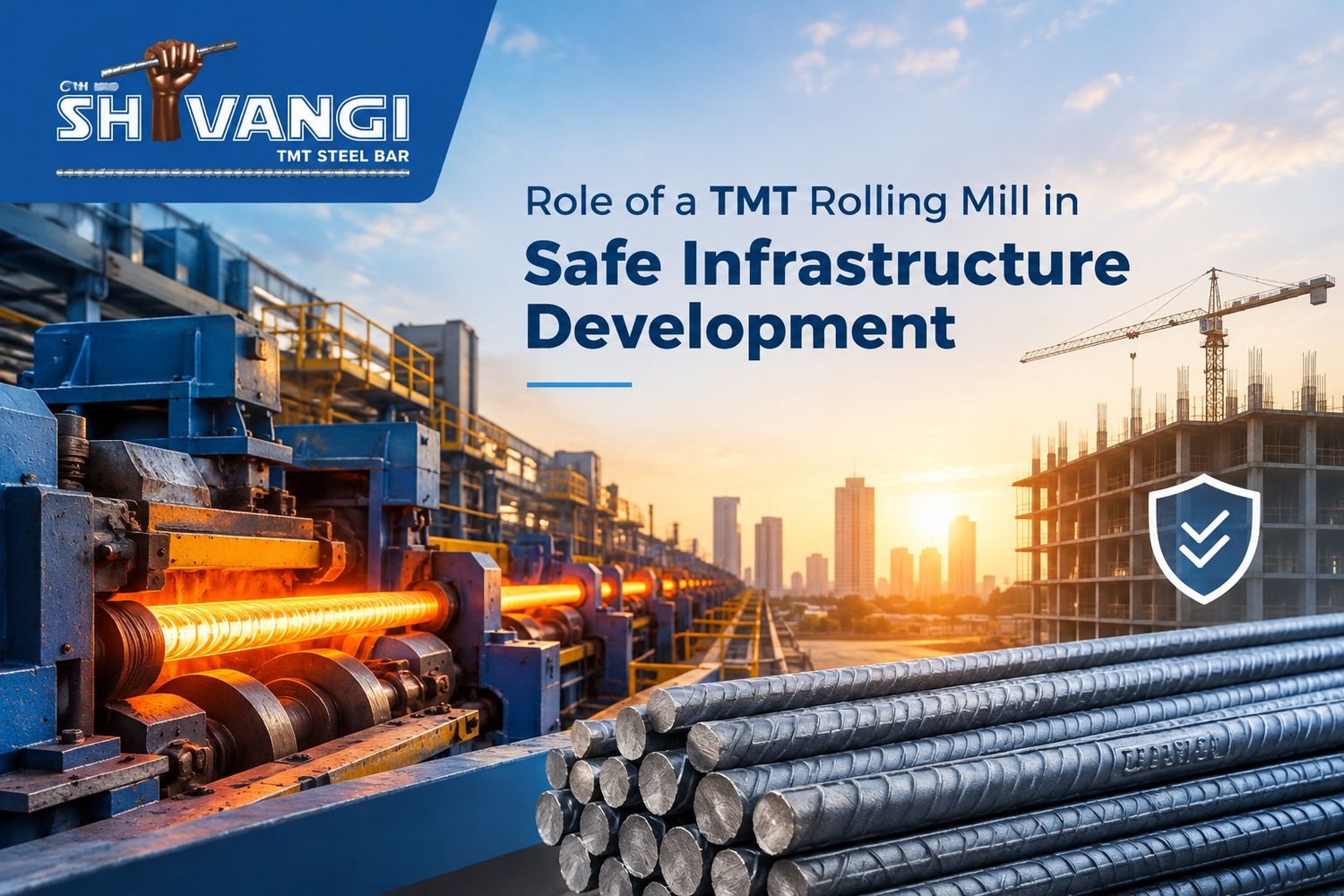
The journey of a TMT bar begins in the reheating furnace, where steel billets are heated to approximately 1200°C. Once the billets reach the optimal temperature, they are passed through a series of rolling stands — the heart of the TMT rolling mill — where the steel is progressively reduced in cross-section and elongated into the desired bar size and shape.
After the final rolling stand, the bars pass through a patented quenching system. High-pressure water jets rapidly cool the outer surface, transforming it into a tough martensitic layer. The residual heat from the core then re-heats the surface slightly, a process known as self-tempering, which relieves internal stresses. Finally, the bars are cooled slowly on the cooling bed, allowing the core to transform into a ductile ferrite-pearlite microstructure.
This precise temperature control and mechanical processing at every stage of the TMT rolling mill is what defines the bar's ultimate tensile strength (UTS), yield strength, elongation, and bendability.
Why the TMT Rolling Mill Matters for Infrastructure Safety
The quality of steel reinforcement is non-negotiable in construction — especially in a country like India, which faces seismic activity, heavy monsoon loads, and extreme temperature variations. A poorly manufactured TMT bar can lead to premature structural failure, corrosion, or catastrophic collapse. This is why the grade and source of TMT bars are critical factors in any infrastructure project.
A well-equipped TMT rolling mill ensures:
- Consistent chemical composition — strict control of carbon, sulfur, and phosphorus levels for corrosion resistance and weldability.
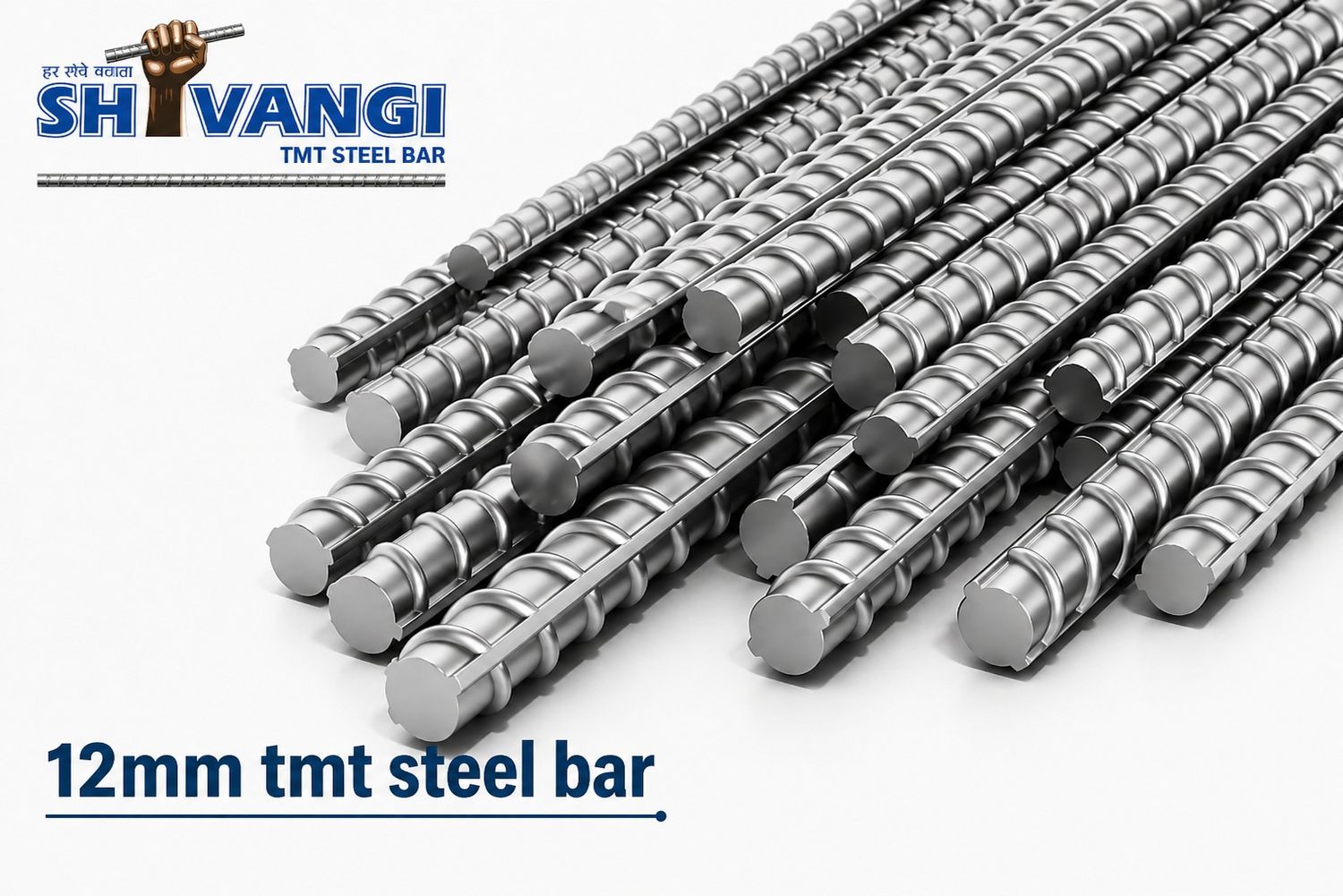
- Uniform rib pattern — ribs on the bar surface ensure proper bonding with concrete, preventing slippage under load.
- Dimensional accuracy — bars manufactured within BIS (Bureau of Indian Standards) tolerances ensure reliable load-bearing performance.
- High elongation values — bars with higher elongation percentage absorb seismic energy without fracturing, making buildings earthquake-resistant.
These properties can only be consistently achieved through a modern, well-controlled TMT rolling mill that adheres to IS:1786 standards — the Indian standard governing the quality of TMT bars used in construction.
Applications Across Critical Infrastructure
TMT bars produced in a high-quality rolling mill are used across a wide range of structural applications:
- Residential and commercial buildings — foundations, columns, beams, and slabs
- Bridges and flyovers — where high tensile strength and fatigue resistance are essential
- Dams and water retaining structures — requiring corrosion-resistant Fe 500D or Fe 550D grade bars
- Industrial plants and power projects — where heavy loads demand premium-grade steel reinforcement
- Metro and railway projects — where bar bendability and weldability are critical design parameters
Each application demands a specific grade of TMT bar, and it is the precision of the TMT rolling mill process that makes it possible to produce bars across Fe 415, Fe 500, Fe 500D, and Fe 550D grades reliably and consistently.
Choosing the Right TMT Bar Manufacturer
Not all TMT rolling mills operate at the same standard. When selecting TMT bars for your project, look for manufacturers that operate their own integrated rolling mill, maintain BIS certification, and have robust quality testing facilities — including spectrometry for chemical analysis and tensile testing machines for mechanical properties.
Shivangi TMT Bars is one such manufacturer that combines modern TMT rolling mill technology with stringent in-house quality controls. Their bars are engineered to deliver high strength, superior ductility, and excellent corrosion resistance — making them the trusted choice for construction projects across central India.
Conclusion
A TMT rolling mill is far more than just a steel processing plant — it is the foundation of safe infrastructure. From the reheating furnace to the cooling bed, every step of the process contributes to the strength, durability, and reliability of the bars that hold our buildings and bridges together. Investing in TMT bars from a reputable rolling mill is, ultimately, an investment in human safety.